CallGet a Quote
Open residential electrical panel with rows of circuit breakers and labeled wiring

Circuit Breaker Upgrade Services in Utah

Get repeated breaker trips, damaged breakers, and circuit concerns properly evaluated. O'Bray Electric provides circuit breaker assessment and replacement services for homes and businesses across Utah's Wasatch Front, with work led by a licensed Master Electrician.

Master Electrician

Highest tier of electrical licensing in Utah.

Licensed & Insured

Fully licensed and insured for your protection.

100% Satisfaction

We stand behind every install with a full guarantee.

Affordable & Fair Pricing

Honest written quotes, no surprises, fair pricing every time.

Get A Quote

Loading the quote form...

Circuit Breaker Assessment and Replacement

Circuit breakers help protect electrical wiring by interrupting power when certain unsafe conditions occur. A breaker that trips repeatedly may be responding to an overloaded circuit, damaged wiring, faulty equipment, a ground fault, an arc fault, or a problem with the breaker itself.

Replacing the breaker without identifying the cause may leave the underlying problem unresolved. O'Bray Electric evaluates the breaker, circuit, connected equipment, electrical load, wiring conditions, and panel compatibility before recommending the appropriate next step.

Concerned About a Circuit Breaker?

Have a licensed Master Electrician evaluate repeated trips, visible damage, compatibility concerns, and the electrical load before replacing or upgrading a breaker.

Circuit Breaker Services

Every breaker issue requires the right diagnosis. We assess the electrical system before replacing components or recommending additional work.

Circuit Breaker Assessment

We evaluate the breaker, connected circuit, electrical load, panel condition, and available information about when the problem occurs. The goal is to determine whether the issue involves the breaker or another part of the electrical system.

Circuit Breaker Replacement

A damaged, failing, or unsuitable breaker may need to be replaced with a compatible component selected for the panel, conductors, circuit, and connected load.

Repeated Breaker Trips

Frequent trips should not be ignored or treated by repeatedly resetting the breaker. We investigate possible overloads, equipment problems, faults, damaged wiring, loose connections, and breaker concerns.

Breakers That Will Not Reset

A breaker may not reset when a fault remains on the circuit, connected equipment has failed, or the breaker has been damaged. The cause should be identified before power is restored.

Dedicated Circuit Planning

Appliances and equipment with substantial or specialized electrical requirements may need a dedicated circuit. We evaluate the equipment specifications, circuit requirements, panel capacity, and existing electrical demand.

AFCI and GFCI Breaker Evaluation

Arc-fault and ground-fault protection may be provided through compatible breakers or other approved devices, depending on the installation. We assess the existing system and applicable requirements before recommending a solution.

Breaker and Panel Compatibility

Not every breaker is suitable for every electrical panel. The replacement must be compatible with the panel and appropriate for the connected conductors and circuit.

Commercial Circuit Breaker Service

Businesses may experience breaker problems due to equipment changes, tenant improvements, additional workstations, lighting, or changing electrical loads. We evaluate the circuit and panel before recommending corrective work.

Is a Breaker Tripping Repeatedly?

A tripping breaker may be responding to an overload, fault, equipment problem, damaged wiring, or another condition that should be properly evaluated.

Schedule a Breaker Assessment

Why Circuit Breakers Trip

A tripped breaker is usually a symptom rather than a complete diagnosis.

Circuit Overload

An overload can occur when connected devices require more current than the circuit is designed to carry. It may happen consistently or only when several devices operate at the same time.

Short Circuit

A short circuit can create a rapid increase in current and cause the breaker to trip. This condition may involve damaged wiring, a failed device, or an improper electrical connection.

Ground Fault

A ground fault occurs when electrical current follows an unintended path. Ground-fault protection is especially important in locations where electrical equipment may be exposed to moisture.

Arc-Fault Condition

Damaged conductors, loose connections, or other conditions can produce electrical arcing. Compatible arc-fault protection is designed to respond to certain patterns associated with these events.

Faulty Equipment

A malfunctioning appliance, tool, power supply, or other connected device may cause the breaker to trip when it is used.

Breaker or Panel Problem

The breaker itself may be damaged, worn, improperly installed, or incompatible with the panel. Heat, corrosion, damaged connections, or other panel conditions may also contribute to the problem.

Signs a Breaker or Circuit Needs Attention

Contact an electrician if you notice:

  • A breaker trips repeatedly
  • A breaker will not reset
  • The breaker feels loose
  • The panel produces buzzing or crackling sounds
  • There is a burning or unusual electrical odor
  • A breaker or panel area appears discolored
  • The panel or breaker feels unusually warm
  • Lights dim or flicker when equipment starts
  • A circuit loses power intermittently
  • Sparks or heat appear around an outlet or device
  • A breaker does not appear to match the panel
  • New equipment repeatedly overloads an existing circuit

Do not remove the panel cover or touch internal components. Energized equipment can remain hazardous even when individual breakers are switched off. If a circuit fault is found, we also provide electrical repairs.

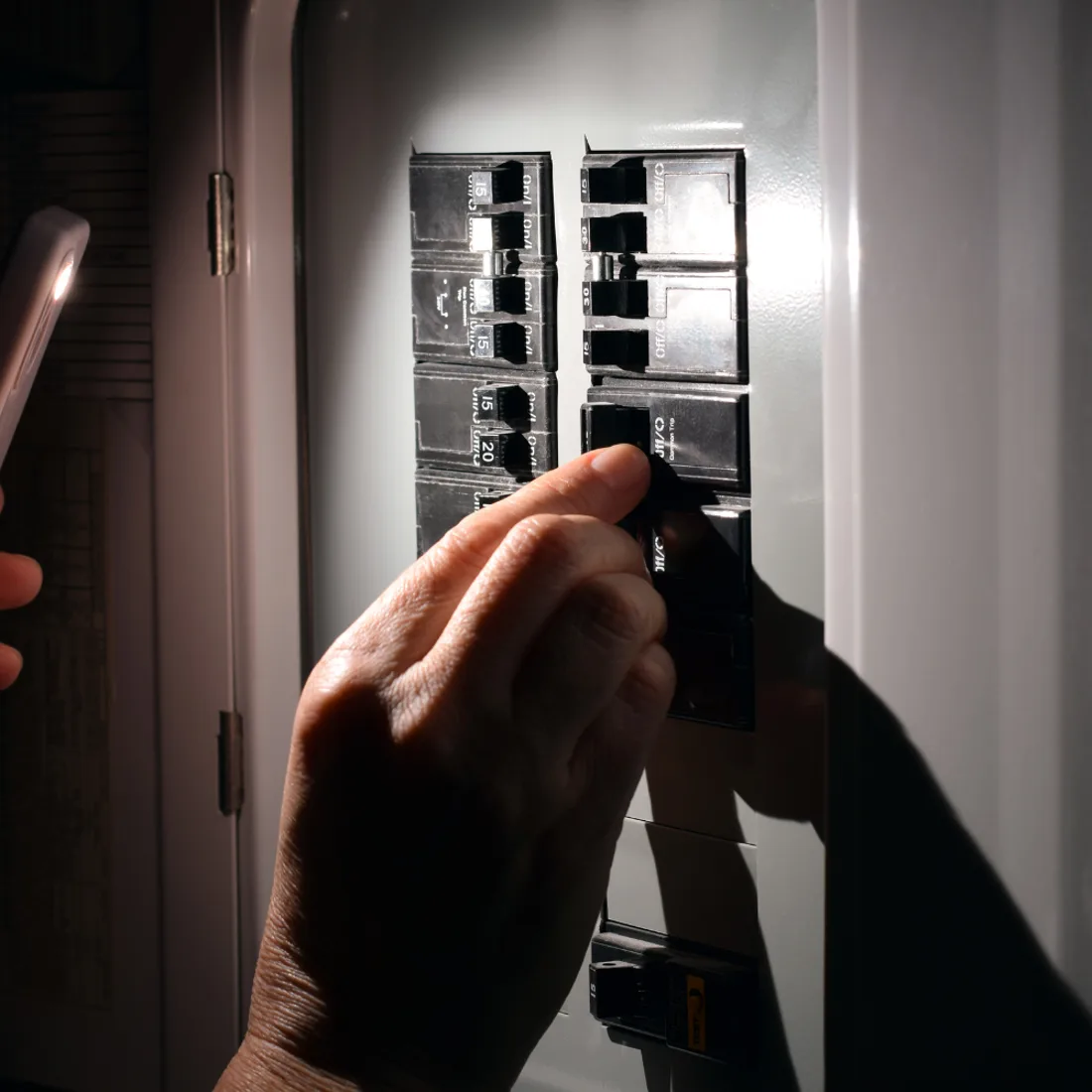
Hand switching a circuit breaker inside an electrical panel lit by a flashlight
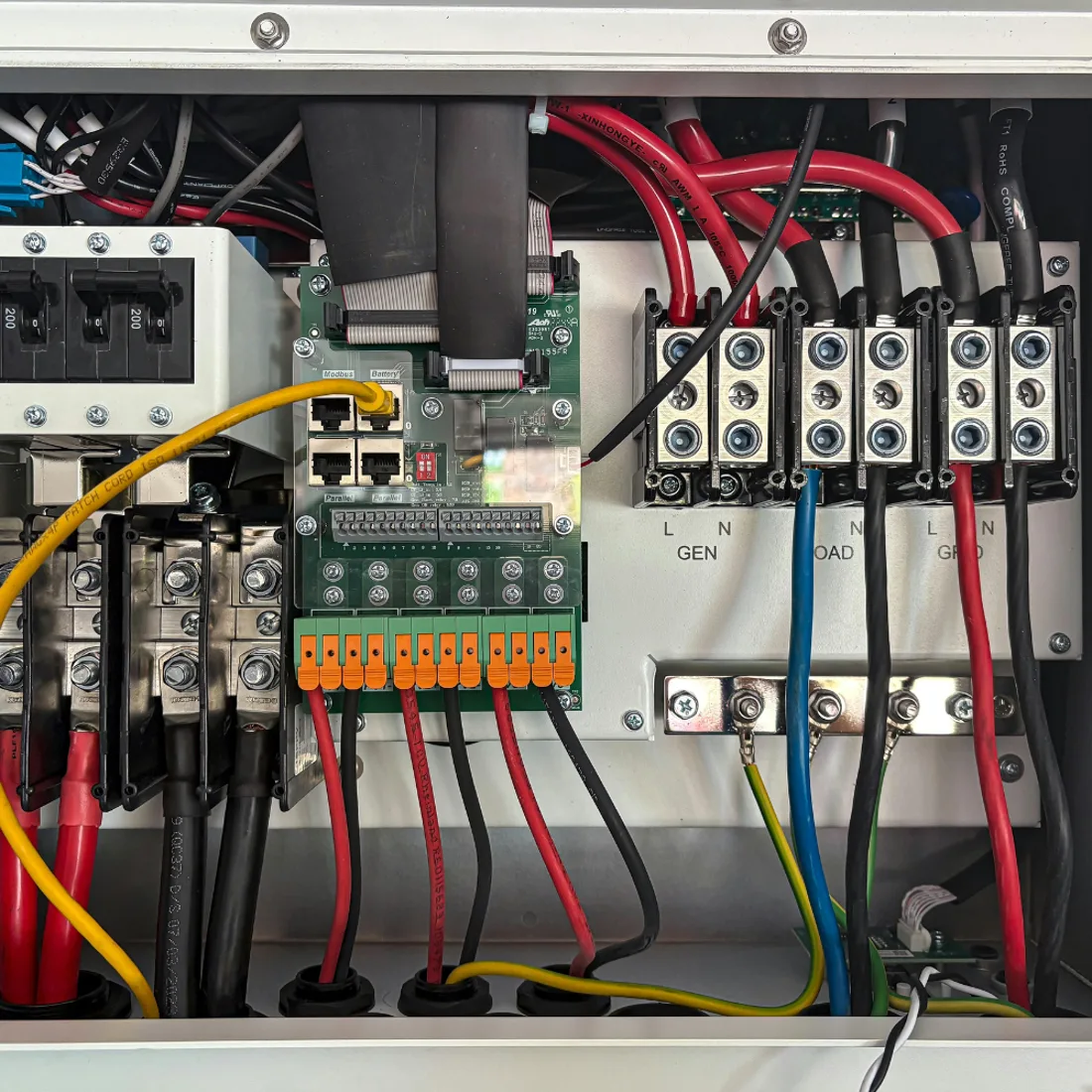
Interior of electrical service equipment showing breakers, terminal blocks, and connected conductors

Why a Larger Breaker Is Not an Automatic Upgrade

Installing a higher-rated breaker is not a safe solution unless the conductors, circuit design, equipment, panel, and applicable requirements support it.

A breaker is selected to help protect the circuit. Increasing its rating without evaluating the wiring can allow conductors or equipment to carry more current than intended.

Before changing a breaker size, an electrician should consider:

  • Conductor size and condition
  • Circuit length and design
  • Connected electrical load
  • Equipment specifications
  • Breaker type and panel compatibility
  • Existing panel and service capacity
  • Applicable code and inspection requirements

In many cases, the appropriate solution may involve reducing the load, repairing the circuit, replacing damaged equipment, or installing a properly designed dedicated circuit.

Standard, AFCI, and GFCI Breakers

Different breaker types provide different forms of protection.

Standard Circuit Breakers

Standard breakers are intended to respond to overcurrent conditions such as overloads and short circuits.

AFCI Breakers

Arc-fault circuit interrupter breakers are designed to detect certain electrical patterns associated with arcing conditions. Whether this protection is appropriate or required depends on the circuit, location, project scope, and applicable requirements.

GFCI Breakers

Ground-fault circuit interrupter breakers are designed to respond when electrical current follows an unintended path. Ground-fault protection is commonly associated with locations where moisture exposure may be possible.

Dual-Function Breakers

Some compatible breakers provide both arc-fault and ground-fault protection. Suitability depends on the electrical panel, circuit, application, and applicable requirements.

The correct breaker must be selected for the specific panel and circuit. Similar appearance does not confirm compatibility.

Does a Breaker Replacement Require a Panel Upgrade?

Not necessarily. A breaker can often be replaced without replacing the entire panel when:

  • The panel is in serviceable condition
  • A compatible replacement is available
  • The circuit wiring is appropriate
  • The electrical load is within the system's capacity
  • No broader panel issue is identified

Additional panel work may be recommended when there is:

  • Significant damage or corrosion
  • Heat damage
  • Incompatible components
  • Limited capacity for planned electrical loads
  • Insufficient breaker space
  • A damaged bus connection
  • Other conditions affecting safe operation

The appropriate recommendation depends on an assessment of the specific panel and project. When broader work is needed, we also provide electrical panel upgrades.

Circuit Breakers for New Electrical Loads

Adding equipment may require more than placing a new breaker in an available slot.

Before adding a circuit for an EV charger, appliance, hot tub, workshop, finished space, or other electrical load, consider:

  • Equipment voltage and amperage
  • Manufacturer requirements
  • Circuit and conductor sizing
  • Existing panel capacity
  • Electrical service capacity
  • Breaker compatibility
  • Disconnecting or protective equipment
  • Permit and inspection requirements

An open breaker position does not automatically confirm that the electrical system has enough capacity for another load.

Our Circuit Breaker Service Process

  1. 1

    Discuss the Problem

    Tell us which breaker is affected, how often it trips, what equipment is operating, and whether you have noticed heat, odors, sounds, or other warning signs.

  2. 2

    Evaluate the Circuit and Panel

    We inspect accessible equipment, review the breaker and panel configuration, and evaluate the connected load and relevant wiring conditions.

  3. 3

    Identify the Likely Cause

    We determine whether the concern appears related to an overload, connected equipment, wiring, breaker, panel, or another electrical condition.

  4. 4

    Explain the Options

    We provide a clear recommendation based on the findings. This may include breaker replacement, circuit repair, load changes, a dedicated circuit, or additional panel work.

  5. 5

    Complete and Test the Work

    After approval, we complete the agreed work and test the affected circuit and compatible protective devices.

Why Choose O'Bray Electric?

O'Bray Electric is a family-run Utah electrical contractor led by a licensed Master Electrician. We investigate the cause of breaker problems instead of assuming that replacing the breaker alone will solve them.

Customers choose O'Bray Electric for:

  • Master Electrician-led expertise
  • Residential and commercial service
  • Clear explanations in plain English
  • Breaker, circuit, and load evaluation
  • Attention to panel compatibility
  • Safety- and code-focused recommendations
  • Permit and inspection coordination when applicable

Frequently Asked Questions

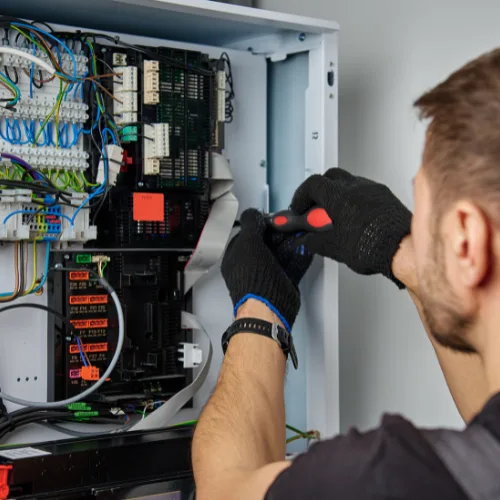
Electrician inspecting breakers and wiring inside an open electrical panel

Why does my circuit breaker keep tripping?

A breaker may trip because of an overloaded circuit, faulty equipment, a short circuit, a ground fault, an arc-fault condition, damaged wiring, or a problem with the breaker. The timing and circumstances of the trips can help an electrician identify the cause.

Can a breaker be replaced with a larger one?

Not unless the circuit conductors, connected equipment, panel, and circuit design are suitable for the higher rating. Installing a larger breaker without evaluating the system can leave the wiring inadequately protected.

What are signs that a circuit breaker may be damaged?

Possible warning signs include failure to reset, looseness, visible damage, unusual heat, discoloration, buzzing, a burning odor, or inconsistent operation. Similar symptoms may also originate elsewhere in the circuit or panel, so the system should be evaluated.

What is the difference between standard, AFCI, and GFCI breakers?

Standard breakers respond to overcurrent conditions. AFCI breakers are designed to detect certain patterns associated with electrical arcing, while GFCI breakers respond to current following an unintended path. Some compatible breakers provide both forms of protection.

Does replacing a breaker require replacing the electrical panel?

Usually not, provided the panel is in serviceable condition and a suitable, compatible replacement is available. A panel upgrade may be recommended if there is damage, insufficient capacity, limited space, incompatible equipment, or another broader concern.

When is a dedicated circuit needed?

A dedicated circuit may be appropriate for equipment with substantial or specialized electrical requirements. The decision depends on the equipment specifications, expected load, wiring, available panel capacity, and applicable electrical requirements.

Get started

Schedule a Circuit Breaker Assessment

Get the cause of repeated trips, breaker damage, or circuit concerns properly evaluated. O'Bray Electric can assess the breaker, circuit, electrical load, and panel before recommending the right solution.

  • Master Electrician-led service
  • Breaker and circuit troubleshooting
  • Compatible breaker replacement
  • Dedicated circuit planning
  • Panel and load evaluation
  • Clear recommendations before work begins

Get A Quote

Loading the quote form...

Service Area

Serving The Wasatch Front And Beyond

We're a service-area business, no storefront required. Our experienced electricians travel to homes and businesses across Salt Lake, Utah, Tooele, and Davis counties so you get expert work without leaving your driveway.

Wasatch Front Service Area

Salt Lake, Tooele, Utah, and Davis counties, with service brought directly to your home or business.

Cities We Serve

Tap A County To Expand

  • Salt Lake City
  • Sandy
  • Holladay
  • Cottonwood Heights
  • Sugar House
  • Midvale
  • Murray
  • Millcreek
  • Taylorsville
  • West Jordan
  • South Jordan
  • West Valley City
  • Kearns
  • Magna
  • Riverton
  • Herriman
  • Bluffdale
  • Draper
  • South Salt Lake