CallGet a Quote
Ceiling fan with wood-finished blades and integrated light mounted on a bedroom ceiling

Ceiling Fan Wiring Services in Utah

Install or replace your ceiling fan with wiring, controls, and mounting support planned for the room and selected fixture. O'Bray Electric provides professional ceiling fan wiring for homes and businesses across Utah's Wasatch Front.

Master Electrician

Highest tier of electrical licensing in Utah.

Licensed & Insured

Fully licensed and insured for your protection.

100% Satisfaction

We stand behind every install with a full guarantee.

Affordable & Fair Pricing

Honest written quotes, no surprises, fair pricing every time.

Get A Quote

Loading the quote form...

Professional Wiring for Ceiling Fans and Controls

A ceiling fan requires more than a convenient electrical connection. The installation must account for the fan's weight, movement, controls, electrical requirements, and the condition of the existing wiring.

O'Bray Electric can install wiring for a new ceiling fan, evaluate an existing ceiling location, replace outdated controls, or troubleshoot a fan that is not operating correctly. Every project begins with an assessment of the room, electrical system, mounting location, and selected fan.

Planning a Ceiling Fan Installation?

Have a licensed Master Electrician prepare the wiring, controls, and fan-rated support needed for a safe, reliable installation.

Ceiling Fan Wiring Services

Whether you are adding a fan to a room for the first time or replacing an existing fixture, the wiring and mounting requirements should be evaluated before installation.

Wiring for New Ceiling Fans

We can add wiring for a ceiling fan in a room without an existing ceiling fixture. The installation approach depends on access, wall and ceiling construction, switch placement, attic access, and the existing electrical system.

Ceiling Fan Replacement

Replacing an existing fan may appear straightforward, but the electrical box, mounting hardware, wiring, and controls should still be checked. We can remove the old fixture, evaluate the existing installation, and connect the replacement fan according to its specifications.

Fan-Rated Electrical Boxes

A standard light-fixture box may not be designed to support the weight and movement of a ceiling fan. We can determine whether the existing box is fan-rated and install suitable support when needed.

Fan and Light Controls

Ceiling fans with integrated lights may be controlled by pull chains, remotes, wall controls, or separate switches. We can evaluate the available wiring and help determine which control arrangement is appropriate for the fan and room.

Remote and Smart Controls

Some fans support handheld remotes, wall-mounted controls, or compatible smart features. Compatibility depends on the fan model, receiver, control system, and existing wiring. These details should be reviewed before selecting or installing a control.

High and Sloped Ceilings

Fans installed on high, vaulted, or sloped ceilings may require compatible mounting hardware, downrods, and careful placement. The fan manufacturer's specifications and the room conditions determine the appropriate setup.

Outdoor Ceiling Fans

Covered patios and other suitable outdoor spaces may benefit from a ceiling fan. The fan, wiring, controls, and electrical equipment must be appropriate for the installation environment and exposure conditions.

Commercial Ceiling Fan Wiring

Ceiling fans can improve air movement in offices, retail areas, workshops, and other commercial spaces. We assess the mounting location, controls, electrical load, ceiling construction, and intended use before installation.

Need Wiring for a New Ceiling Fan?

Get the correct wiring, controls, and mounting support for your room and selected ceiling fan.

Discuss Your Ceiling Fan Project

Planning Your Ceiling Fan Installation

Good planning helps the fan operate properly and fit the room.

Before installation, consider:

  • The size and height of the room
  • Flat, sloped, vaulted, or unusually high ceilings
  • The weight and specifications of the fan
  • Whether a ceiling light or fan already exists
  • The condition of the existing electrical box
  • Whether the fan includes a light
  • Preferred wall, remote, or smart controls
  • Available wiring and circuit capacity
  • Furniture placement and intended airflow
  • Indoor, damp, or outdoor installation conditions

If you have not selected a fan yet, understanding the room and existing wiring can help narrow the options. Our indoor lighting installation work often goes hand in hand with fan and fixture projects.

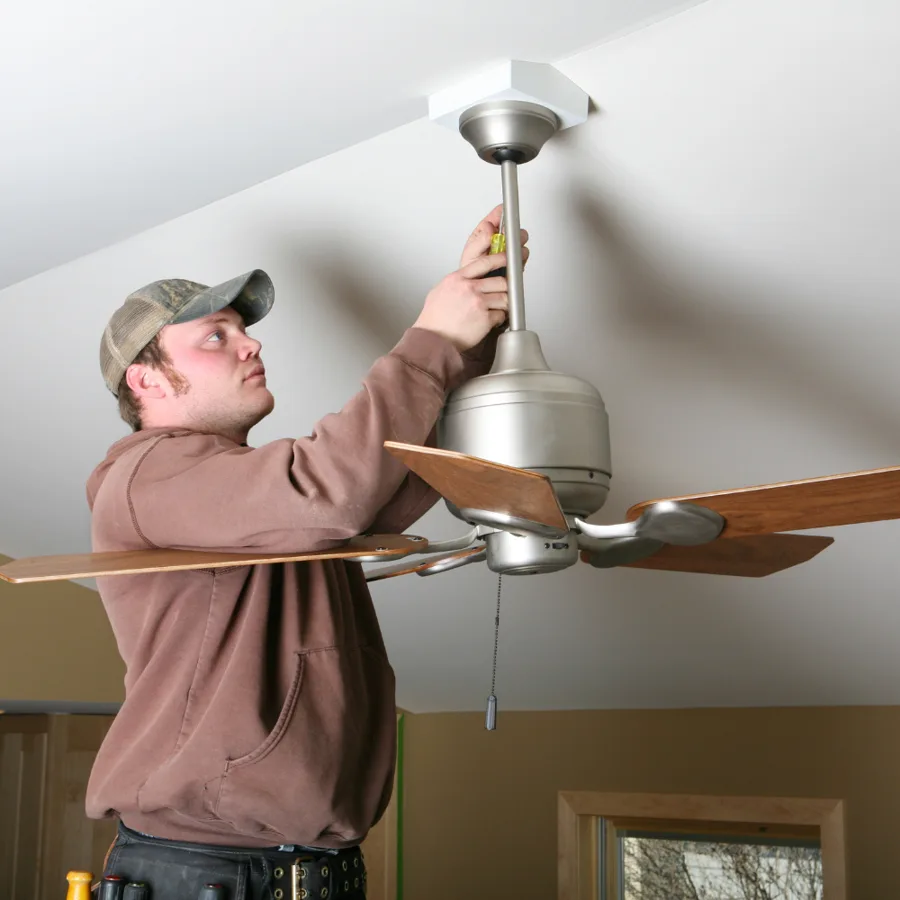
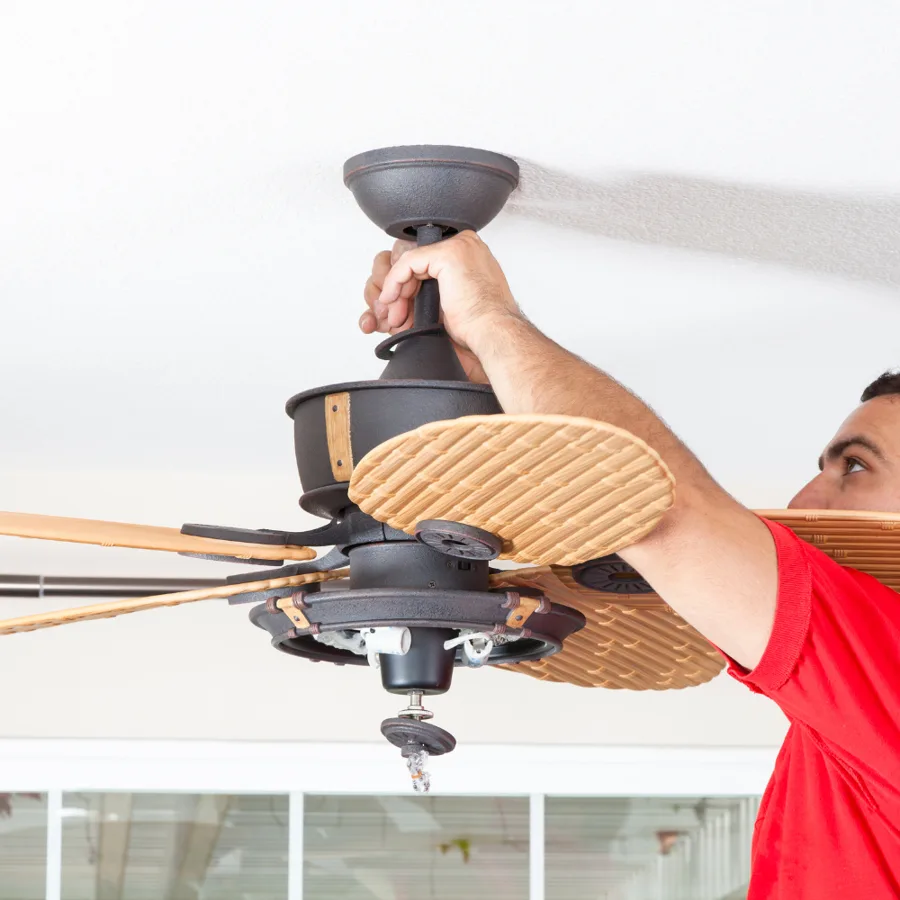
Technician adjusting the downrod of a ceiling fan mounted on a sloped ceiling

New Fan Installations and Fixture Replacements

Adding a Fan Where No Fixture Exists

Installing a ceiling fan where there is no existing ceiling fixture may require new wiring, a wall switch, and suitable structural support. The most practical wiring route depends on the building's construction and access around the installation area.

Replacing a Ceiling Light With a Fan

An existing light location may provide access to electrical wiring, but that does not automatically mean the electrical box can support a ceiling fan. The box, mounting method, wiring, and controls must be evaluated before the fan is installed.

Replacing an Existing Ceiling Fan

When replacing an existing fan, we inspect the electrical box, mounting hardware, wiring, and controls. If the new fan has different electrical or control requirements, additional work may be needed.

Adding a Light Kit

Some ceiling fans support compatible light kits. Installation depends on the fan design, manufacturer specifications, available wiring, and control arrangement.

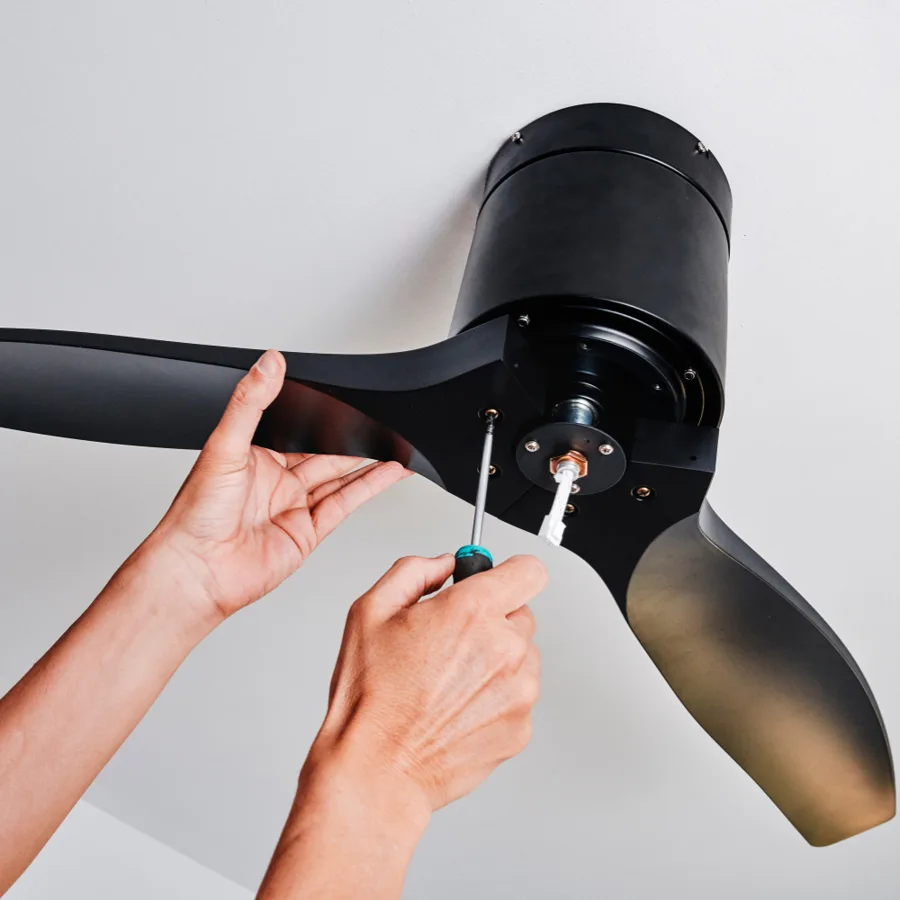
Hands attaching a blade to a black ceiling fan motor housing with a screwdriver

Wall Switches, Remotes, and Fan Controls

The right control setup depends on how you want to operate the fan and light.

Single-Switch Control

Some installations use one wall switch to provide power while fan speed and lighting are controlled through pull chains or a remote.

Separate Fan and Light Switches

Where compatible wiring is available or can be installed, the fan and light may be controlled independently from separate wall switches.

Remote Controls

Remote-controlled fans use a compatible receiver and transmitter. The fan model, wiring, canopy space, and existing controls should be reviewed before installation.

Smart Controls

Compatible smart fans and control devices may offer app, schedule, or voice-control features. Not every control works with every fan motor, receiver, or wiring configuration, so compatibility should be confirmed before installation.

Safety and Electrical Considerations

Ceiling fans create weight, vibration, and movement that ordinary light fixtures do not. Safe installation requires suitable mounting support and electrical connections.

Important considerations include:

  • A fan-rated electrical box or another approved support method
  • Secure mounting to suitable structural support
  • Wiring appropriate for the fan and controls
  • Compatible switches, receivers, and speed controls
  • Correct fan clearance and placement
  • Equipment suitable for indoor, damp, or outdoor locations
  • Evaluation of damaged or outdated wiring
  • Applicable permit and inspection requirements

Do not continue using a fan that appears loose, produces electrical odors, sparks, or causes a breaker to trip. Turn it off and have the installation inspected. Damaged or outdated circuits may call for electrical repairs before the fan is reinstalled.

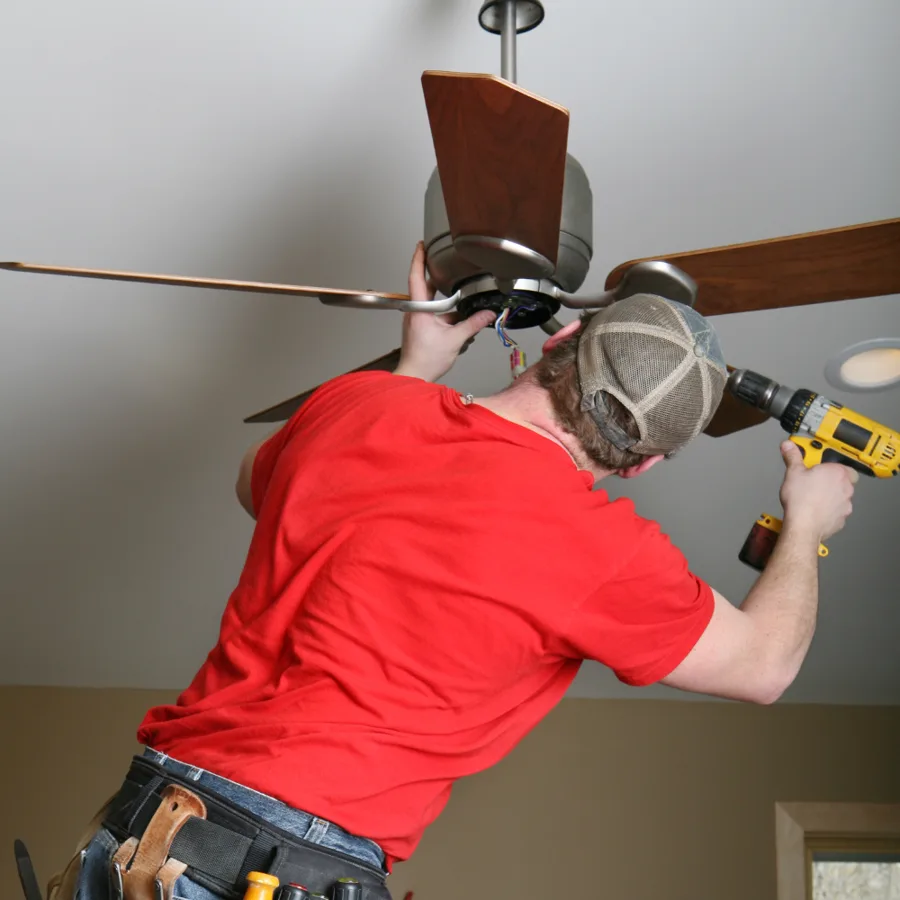
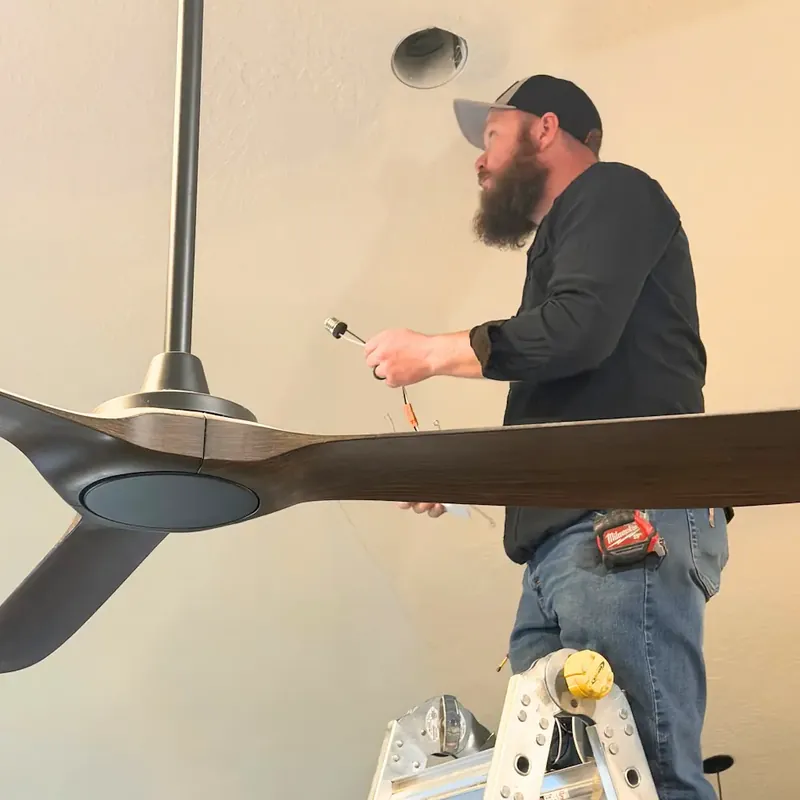
Technician connecting wiring at the canopy of a ceiling fan while holding a drill

Ceiling Fan Problems We Can Evaluate

A ceiling fan problem may originate from the fan, control, receiver, electrical connection, or supporting hardware.

Contact an electrician if you notice:

  • The fan will not turn on
  • The light works but the fan does not
  • The fan works but the light does not
  • A wall switch or remote responds inconsistently
  • The breaker trips when the fan operates
  • The fan or switch produces buzzing or crackling sounds
  • The fan changes speed unexpectedly
  • The electrical box or mounting point appears loose
  • There is a burning smell or visible discoloration
  • The fan suddenly stops working

Wobbling can have several causes, including blade alignment, mounting, hardware, or fan condition. The source should be identified before assuming that balancing alone will correct it.

Our Ceiling Fan Wiring Process

  1. 1

    Discuss the Project

    Tell us about the room, existing fixture, selected fan, ceiling height, and preferred controls.

  2. 2

    Inspect the Installation Area

    We evaluate the electrical box, mounting support, wiring, circuit, switch location, ceiling construction, and access conditions.

  3. 3

    Confirm the Installation Plan

    We explain the recommended wiring, support, controls, and any additional electrical work in plain English.

  4. 4

    Complete the Wiring and Installation

    We install or update the necessary wiring, electrical box, controls, and compatible fan components based on the agreed project scope.

  5. 5

    Test the Fan and Controls

    We test the fan speeds, lighting, switches, and compatible controls. We also coordinate applicable permit or inspection requirements when the project requires them.

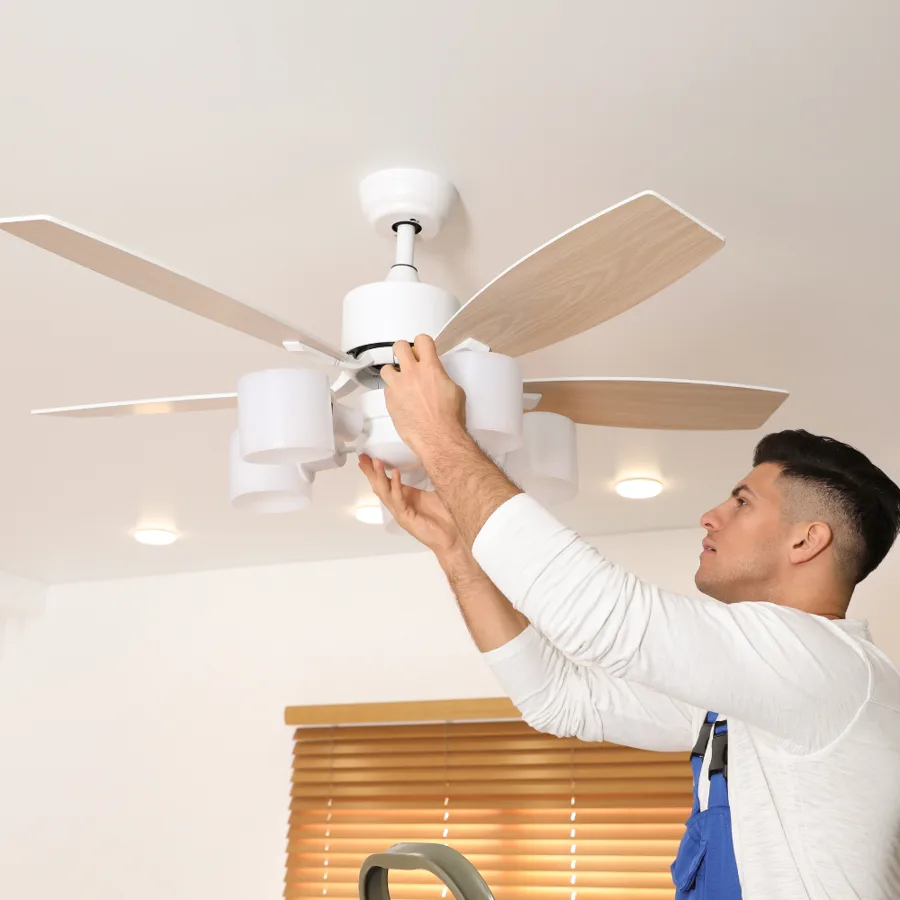
Electrician reaching up to install a white ceiling fan with light kit in a bright room

Why Choose O'Bray Electric?

O'Bray Electric is a family-run Utah electrical contractor led by a licensed Master Electrician. We provide straightforward recommendations based on the fan, room, existing wiring, and how you want to control the installation.

Customers choose O'Bray Electric for:

  • Master Electrician-led expertise
  • Residential and commercial service
  • Clear, plain-English communication
  • Careful evaluation of wiring and mounting support
  • Help selecting an appropriate control arrangement
  • Attention to safety and code compliance
  • Permit and inspection coordination when applicable

Frequently Asked Questions

Technician mounting a ceiling fan canopy to a ceiling box

Does a ceiling fan need a fan-rated electrical box?

A ceiling fan must be supported by equipment and a mounting method suitable for its weight and movement. A standard light-fixture box may not be designed for this purpose. The existing box and structural support should be evaluated before installing the fan.

Can a ceiling fan replace an existing light fixture?

Often, but the existing wiring and electrical box must be inspected first. A light-fixture box does not automatically provide suitable ceiling-fan support. The new fan's size, weight, controls, and electrical requirements must also be considered.

Can the fan and light use separate wall switches?

Separate controls may be possible when the fan supports them and suitable wiring is available or can be added. The appropriate setup depends on the fan model, existing wiring, wall controls, and installation conditions.

Can wiring be added where there is no ceiling fixture?

In many cases, new wiring and fan-rated support can be added. The installation method depends on attic access, ceiling and wall construction, switch placement, circuit availability, and the proposed fan location.

Can a fan be installed on a high or sloped ceiling?

Many fans can be installed on high or sloped ceilings when compatible mounting hardware and downrods are available. The ceiling angle, height, fan specifications, clearance, and structural support must be considered.

Why is my ceiling fan humming, wobbling, or not working?

Possible causes include loose hardware, blade alignment, mounting problems, an incompatible control, receiver issues, motor problems, or electrical connections. An inspection can help determine whether the issue involves the fan, wiring, controls, or mounting support.

Get started

Discuss Your Ceiling Fan Project

Add comfortable air movement with wiring, mounting support, and controls planned for your room and selected ceiling fan. O'Bray Electric can evaluate the existing electrical system, explain your options, and complete the work with attention to safety and long-term reliability.

  • Master Electrician-led service
  • New wiring and replacement projects
  • Fan-rated box and mounting evaluation
  • Wall, remote, and compatible smart controls
  • Clear recommendations before work begins

Get A Quote

Loading the quote form...

Service Area

Serving The Wasatch Front And Beyond

We're a service-area business, no storefront required. Our experienced electricians travel to homes and businesses across Salt Lake, Utah, Tooele, and Davis counties so you get expert work without leaving your driveway.

Wasatch Front Service Area

Salt Lake, Tooele, Utah, and Davis counties, with service brought directly to your home or business.

Cities We Serve

Tap A County To Expand

  • Salt Lake City
  • Sandy
  • Holladay
  • Cottonwood Heights
  • Sugar House
  • Midvale
  • Murray
  • Millcreek
  • Taylorsville
  • West Jordan
  • South Jordan
  • West Valley City
  • Kearns
  • Magna
  • Riverton
  • Herriman
  • Bluffdale
  • Draper
  • South Salt Lake